
1. Choose what you want to keep
You can use a notebook or an app. The best format is the one you can keep up with without turning reading into a chore.
2. Log the essentials
Write down the title, author, start date and finish date. Add the format and your progress if that helps you pick the book back up.
3. Write while the impression is fresh
After a reading session, jot down one sentence about how you felt. Keep quotes separate from personal comments and mark spoilers so they don’t ruin future rereads.
4. Write a final entry
Template: title and author; when I read it; my rating; a passage that stood out; how I felt; who I’d recommend it to; what I want to remember a year from now.
5. Come back to your entries
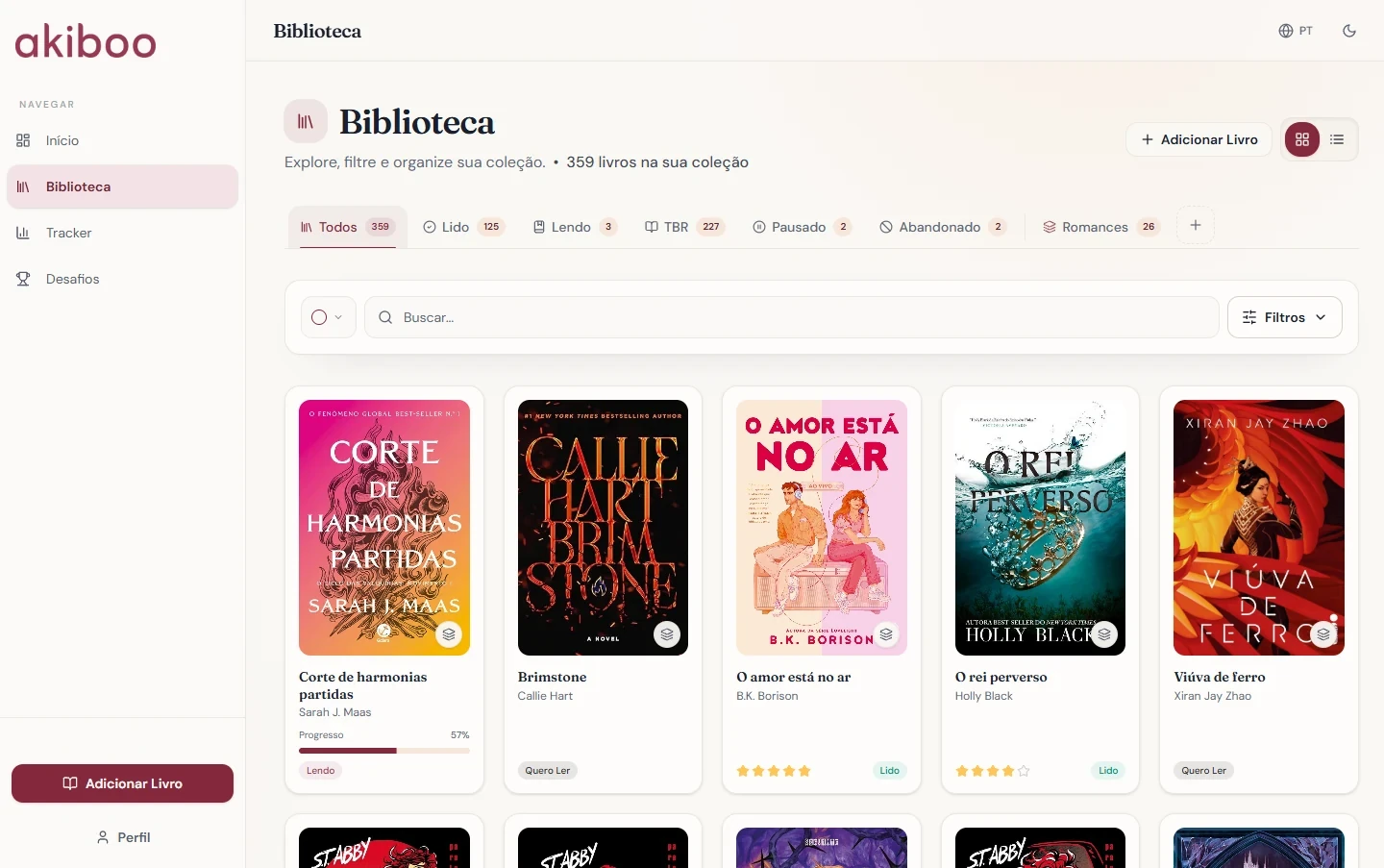
At the end of the month, look back at your reads and look for patterns. On Akiboo, you can keep your library and entries together in a private space.
Notebook, spreadsheet or app: which format should you choose?
In a notebook, you can draw and write without needing a screen. A spreadsheet makes it easy to work with standard fields and numbers. A reading app brings together your library, progress and entries in an interface built for books.
Choose based on what you’ll want to look up later. To remember emotions and passages, prioritize space to write. To track goals and find titles, look for organization and filters. You can try a format with a single book before moving all your records over.
A reading journal template to copy
Title and author: ___. Started and finished: ___. I chose this book because: ___. A passage I want to keep: ___. My impression while reading: ___. My rating and why: ___. I want to remember that: ___.
Fill in only the fields that are useful. To keep the entry from getting too long, write three sentences when you finish: one about the story, one about the experience and one about what stayed with you.
How to write about a book without writing a review
A review usually explains and evaluates a book for other people. In a journal, you write for yourself. You can note a question, a reaction to a scene or a personal memory, without laying out the whole plot or justifying every opinion.
If you want to expand on a comment, separate observation from interpretation. First describe something you noticed, like short chapters or alternating narrators. Then explain how it affected your reading. This distinction helps you write more specific entries.
How to keep the journal going after the first month
Tie your entry to a moment that already exists: closing the book, updating your library or choosing your next read. A short note written regularly tends to be easier to keep up than letting several books pile up to log at the end of the month.
Don’t worry about filling in the past. You can start with your current book and add earlier ones little by little. To organize your reads alongside your comments, check out Akiboo’s online reading journal.
Questions about keeping a journal
Do I need to log old books?
No. You can start with your current read and fill in your history gradually.
What should I write when I didn’t like the book?
Note what didn’t work for you, with a concrete example. You don’t need to justify your opinion to anyone else.
How often should I update it?
Choose a pace you can keep: at the end of a session, a chapter or when you finish the book.
Your next story starts here.
Create your account and start organizing your reading. See the free and Premium features on the plans page.